

Star knowledge
Wisdom, passed forward.
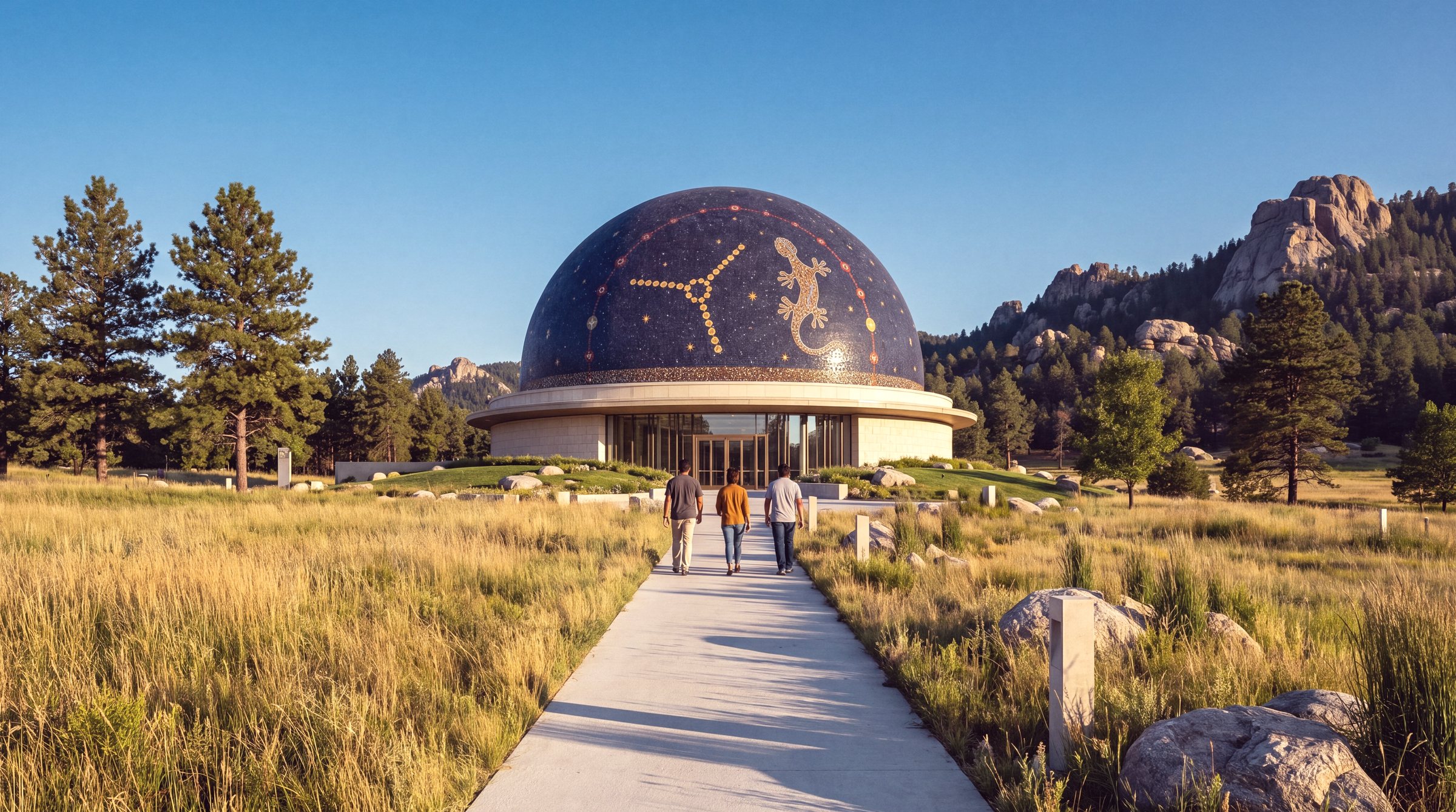
A planetarium that keeps the wisdom of generations alive.
It will honor ancient Indigenous traditions and the Indigenous pilots, engineers and astronauts who carried the sky’s stories into space.
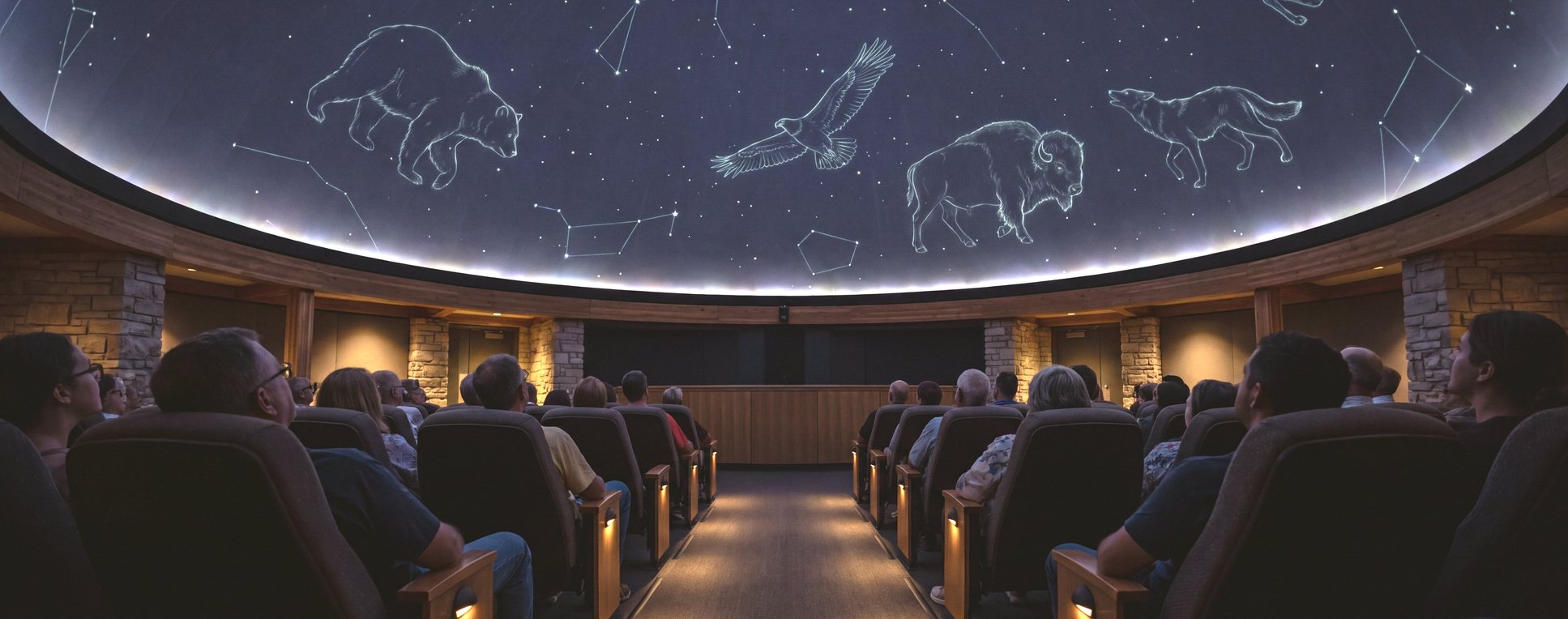
Beneath the dome
Indigenous constellations, projected.
The dome will fill with Indigenous constellations and the stories told about them. Visitors will learn how Indigenous peoples read the heavens for faith, for finding the way and for understanding the world, as taught across many generations.
Made with care
Shaped with Indigenous advisors.
It will be designed in close consultation with Indigenous cultural advisors, sharing ancient knowledge through modern projection.
The Hall of Explorers
The sky’s stories, carried into orbit.
Beyond the dome, the Hall of Explorers will honor Indigenous Americans in flight and space, pairing each story with objects from the mission.
In your hand
The sky, on your phone.
A phone app will trace Indigenous constellations over the real night sky and share what they mean.
Star Knowledge
As it is above, it is below.
In Lakota star knowledge, the sky and the land mirror each other. Choose a constellation to see it drawn and read its teaching.
One teaching runs beneath them all: kapemni, “as it is above, it is below.” Two tipis meet at their tips, the star world over the earth, and where the two mirror each other a doorway opens between them.
Many Lakota constellations have a counterpart place on earth.
Hall of Explorers
From the stars to space.
For centuries, Native nations have read the night sky. That gaze has since taken flight.
“Your life’s work is going to be landing men on the Moon.”Jerry Elliott High Eagle, Osage and CherokeeA voice he heard at age five. His mother’s answer: “Keep the vision. Keep the dream!”
- 2002
Commander John Herrington, USN
Chickasaw Nation
The first Native American in space, aboard Space Shuttle Endeavour in 2002.
- 2022
Colonel Nicole Aunapu Mann, USMC
Wailacki of the Round Valley Indian Tribes
The first Native American woman in space, commanding NASA’s SpaceX Crew-5 mission in 2022.
- WASP
Millie Rexroat
Oglala Lakota
Flew with the Women Airforce Service Pilots (WASP) in World War II.
- Rockets
Mary Golda Ross
Cherokee
Helped engineer the rockets and spacecraft that opened the path to the Moon and planets.
- Apollo 13
Jerry Elliott High Eagle
Osage and Cherokee
A NASA physicist who helped bring Apollo 13 home from Mission Control.
Lakota prayerMitakuye Oyasinwe are all related
Firsts in space
Gallery
Support the memorial
Help light the dome.
Your gift helps pass star knowledge to the next generation.